
Home Value

Fall Tree Care: October Is for Planting and Looking, Not Cutting

Fall Tree Care: October Is for Planting and Looking, Not Cutting 150 150 Creative Studio

Key takeaways

  • Fall is the worst season for routine pruning, because a pruning cut is an injury and a tree heading into winter is not growing the tissue it uses to close one.
  • Fall is the best season for planting in Georgia, because the soil stays warm enough to support root growth through much of the winter.
  • The tree job that does belong to October is a slow walk around the yard, since the weeks when leaves are coming down are the only time you can see the shape of a tree clearly.
  • Homeowners insurance covers a tree that hits your house or another insured building, and generally does not cover hauling away one that falls in the yard and hits nothing.
  • Roughly three-quarters of Atlanta’s tree cover stands on single-family residential land, so most of this city’s trees are private property and somebody’s responsibility.

A client called me in October last year about a tree. Not a mortgage question, a tree question. A big water oak had come down across his driveway during a storm, and he wanted to know whether there was a smart way to pay for the removal, because his insurance company had told him something he did not expect and he was still absorbing it.

I get more of these calls than you might think. People call their loan officer when a number lands on them out of nowhere, and a mature tree failing next to a house is one of the larger numbers a homeowner meets without warning. That conversation sent me down a long road of reading about tree care, and what I found surprised me enough that I have been repeating it to clients ever since. Almost everything most of us do with our trees in the fall, we are doing in the wrong season.

The season everybody prunes is the season arborists tell you to wait

Autumn feels like the time to cut things back. The leaves come off, the yard looks unkempt, the weather is finally pleasant to work in, and tidying up seems like the responsible thing to do before winter arrives. It is one of the most common instincts in homeownership, and horticulturists spend a good part of every autumn talking people out of it.

The reason comes down to what a pruning cut actually is. Kansas State University’s extension service puts it plainly: pruning, although a recommended practice, creates an injury. The question is never whether to prune, it is when to prune so the tree can deal with the wound as quickly as possible. Fall is not that moment, because the plant is shutting down for the winter and is not focused on producing the new tissue that protects the cut. Late winter and early spring, when growth is fastest, is when the tree is best equipped to handle it.

There is a second reason, and it changed how I look at trees. Trees do not heal the way we do. When you cut yourself, the wound scabs, new skin grows in, and eventually the injury is gone. A tree cannot do that. Instead it seals, walling the damaged wood off behind a layer of cells and growing new wood over the top. Arborists call this compartmentalization. The damage is still in there permanently, covered over. If you cut into that trunk years later you can still see exactly where the old wound was.

Timing is what decides which of those two outcomes you get. A cut made when a tree can seal it quickly becomes a small sealed pocket. A cut made when the tree is shutting down for the year sits open longer, and if the tree cannot get ahead of it, that is where rot begins. Decay builds cavities, and cavities are what eventually cause a large limb or a whole trunk to fail years down the line, often in a storm, often over something expensive.

None of this means you should never touch a tree in autumn. Extension guidance is clear that removing dead, dying, broken or hazardous limbs can be done at any time of year, because the safety of people and property comes first. If a branch is hanging over your driveway right now, deal with it now. What should wait is the discretionary work: the shaping, the thinning, the general tidy-up that is about how the tree looks rather than whether it is dangerous.

Fall is the right time to plant, and Georgia’s soil is the reason

Planting is where the calendar turns around completely. The season that is wrong for cutting is the best one of the whole year for putting a tree in the ground, and in Georgia the advantage is bigger than it is in most of the country.

University of Georgia Extension has been making this case for years. Most people plant in spring, because spring is when garden centers are full and planting feels seasonal, but a tree planted in fall gets to build an extensive root system while the top of the plant is dormant and demanding nothing. Frank Watson, a UGA Extension coordinator, points out that soil temperature across most of the state stays warm enough to support root growth during most or all of the winter. The tree is not sitting idle for four months. It is building the thing it will need most.

The payoff arrives in July. A tree planted this October goes into next summer with roots already established and ready to pull water. A tree planted next April goes into the same summer with almost nothing underground, trying to keep a full canopy of leaves supplied during the hottest, driest stretch of a Georgia year. UGA’s position is that a correctly sited and planted fall tree will simply outperform a spring one, and the reason is that head start.

A few things matter if you plant this autumn. Check the trunk before you buy, because any damage to the bark is reason enough to leave that tree at the nursery. Look for a straight trunk and an even, balanced canopy, which will be easier to shape later and tends to be structurally sounder. Check the container for roots circling the inside, which is a sign the tree has been in the pot too long and will have a poor root system once it goes in the ground. Dig the hole two to three times the width of the root ball, set the tree at the same depth it was growing at, and leave the fertilizer until spring so the roots establish before you push new growth up top. New trees need extra water for their first two years, which is the step most people abandon somewhere in year one.

Think about placement as though the tree is already full grown, because one day it will be. The Insurance Information Institute, drawing on restoration specialists, suggests keeping large shade trees at least twelve feet from structures that roots could damage, and offers a general rule of not planting trees within twenty feet of the house. Roots rarely attack a foundation directly. What they do is shift and dry the soil underneath and around it, and unstable soil is what moves a foundation.

Most of Atlanta’s trees are standing in somebody’s yard
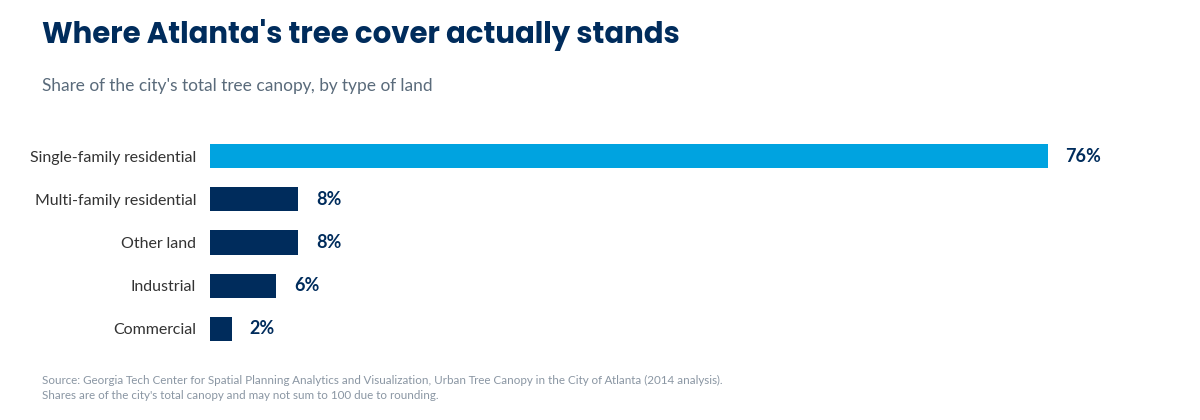
Bar chart showing that single-family residential land holds 76 percent of Atlanta's total tree canopy, ahead of multi-family residential land and other categories at 8 percent each, industrial land at 6 percent and commercial land at 2 percent

We talk about Atlanta’s tree cover as though it belongs to the city, and legally almost none of it does. Georgia Tech’s canopy analysis for the City of Atlanta found that single-family residential land accounts for about three-quarters of the city’s entire tree canopy. Parks hold around five percent. The rest is scattered across multi-family, industrial and commercial land.

Private ownership of those trees reframes the whole subject. When people say Atlanta is a city in a forest, the forest they are describing is mostly in back gardens, along driveways and over roofs, and it is maintained, or not maintained, by individual homeowners one property at a time. If a large tree near your house is in poor shape, there is no city department that is going to notice.

Atlanta’s tree cover has been thinning, too. The most recent assessment from Georgia Tech, released in August 2026, put the city’s tree cover at 45.7 percent of total land area in 2023, down from 46.5 percent five years earlier, and found the city has lost an average of close to 150 acres of urban forest a year since 2008. Most of that recent loss came from development rather than from individual homeowners cutting trees down. Still, it means the trees standing in private yards are carrying more of the load than they used to.

What to look at when you walk the yard

Walking the yard is the job that belongs to October, and it costs nothing but half an hour. Once the leaves start coming down, you can see the architecture of a tree for the first time since April: the branch structure, the dead wood hiding in the middle of the tree, the shape of the trunk. In July it is all hidden behind foliage.

Professional arborists use a structured process for this, and the categories they work through are useful even for an untrained eye. The International Society of Arboriculture’s basic risk assessment walks an assessor through the crown, the branches, the trunk, and the root collar and soil, and then asks the question that most homeowners skip entirely: what is underneath. That last question is the one that matters most. A leaning, hollow tree in the middle of an empty field is a tree. The same tree twenty feet from a bedroom is a problem.

Start by standing back far enough to see the whole tree at once, then work down. In the upper part of the tree, you are looking for dead branches, broken or hanging limbs still caught up there, and whether the leaves this year came in noticeably thinner or smaller than on similar trees nearby. Significant dead wood up top is a sign of a tree in decline, not just an untidy one.

On the branches themselves, look for places where two limbs of similar size join, especially where the bark looks pinched into the union rather than flowing around it. Those unions are weaker than they look and are a common failure point. Look for cracks, and for evidence that a branch has already broken off at some point, which tells you the tree has a habit.

On the trunk, the things to note are a lean, cracks running up and down the wood, missing or dead bark, and open cavities. Mushrooms or hard shelf-like growths on the trunk are the clearest signal of all, because those are the fruiting bodies of fungi that live on decaying wood and are considered definite indicators of decay inside. If you see them on the trunk or at the base of a tree near your house, that is the point to stop guessing and call somebody.

At the base, look at the soil. Cracked or heaved soil on one side of the trunk means the tree has been moving in the wind more than it should. Look for whether the flare at the bottom of the trunk is visible at all, or whether soil, mulch or a new patio has been piled up against it. Check whether anything has changed near the tree in the past few years, such as a trench for a utility line, a grade change, a new driveway, or the removal of neighboring trees that used to shelter this one from wind.

What insurance does, and what it does not

Insurance is the part that caught my client out, and it catches out most people. Almost everyone assumes a homeowners policy treats a fallen tree as a fallen tree, and it does not.

According to the Insurance Information Institute, if a tree hits your home or another insured structure such as a detached garage, a standard homeowners policy covers the damage to the structure and the contents inside it, including trees brought down by wind, hail, or the weight of ice or snow. It does not matter whose property the tree was growing on. If it lands on your house, you file with your own insurer.

If the tree hits an insured structure, the policy also contributes toward removing it, but that contribution is capped and it is not designed to cover the full cost of taking down and hauling away a mature hardwood. And if the tree falls without hitting a structure, there is generally no coverage for removal at all. A large oak lying across your back yard, having touched nothing, is typically yours to deal with, though some insurers make an exception when the tree is blocking a driveway or an accessibility ramp.

Maintenance matters too. The Institute notes that where a neighbor’s tree falls on your house, your insurer may pursue their insurer if negligence can be shown, such as a tree that was diseased or was not properly maintained. That runs both directions. A tree you knew was failing and did nothing about is a different conversation with an insurance company than a healthy tree taken down by a storm.

I am not an insurance agent and your policy is the only thing that actually governs your situation. The useful move is to look up your own tree and debris removal limits before you need them, rather than during the week you need them.

More tree cover is not automatically more value

One last thing about value, because it surprised me. Trees are good for a property’s value, but the relationship is not a straight line, and cutting a healthy tree down is not automatically a loss.

A US Forest Service meta-analysis pooled twenty-one separate studies of tree cover and home prices, and found that the value effect appears to peak at somewhere around thirty percent tree cover on the property itself. The authors also noted that the typical study property had only about fourteen percent cover, which suggests most American homeowners have fewer trees than the market would reward, not more.

So if you are weighing whether a particular tree earns its place, you are asking a fair question, and the answer is not always yes. A well-placed, healthy, well-shaped tree near the house is doing real work for the property. A struggling one leaning over the roof is not paying you anything, and it is the one that will eventually send somebody a bill.

Your fall walkaround

Print this, or just keep it on your phone. Give it half an hour on a Saturday once the leaves are properly coming down, and work through one tree at a time rather than trying to take in the whole yard at once.

  • ☐  Stand back far enough to see each large tree whole, and start with the ones closest to the house, the driveway and where people sit.
  • ☐  Note what is underneath each tree within a distance equal to its own height, because that is what it can reach if it fails.
  • ☐  Look for dead branches high in the tree, and anything broken or hanging that is still caught up there.
  • ☐  Check where two limbs of similar size meet, looking for bark pinched into the join rather than flowing around it.
  • ☐  Look up and down the trunk for cracks, missing or dead bark, and open cavities.
  • ☐  Look for mushrooms or hard shelf-like growths on the trunk or at the base, which are a sign of decay inside.
  • ☐  Check the soil at the base for cracking or heaving on one side, and make sure the flare at the bottom of the trunk is not buried.
  • ☐  Note any change near the tree in the last few years: trenching, a grade change, new paving, or neighboring trees removed.
  • ☐  Book a certified arborist for anything with mushrooms on it, a new lean, or a large limb over a room somebody sleeps in.
  • ☐  Save the discretionary pruning for late winter, and put anything you want to plant in the ground this autumn instead.

If the walk turns up something that is going to cost real money, I would rather you called me early than late. A tree is not a mortgage question, but how you cover a large unplanned bill often is, and the options are better before the work is booked than after the invoice arrives.
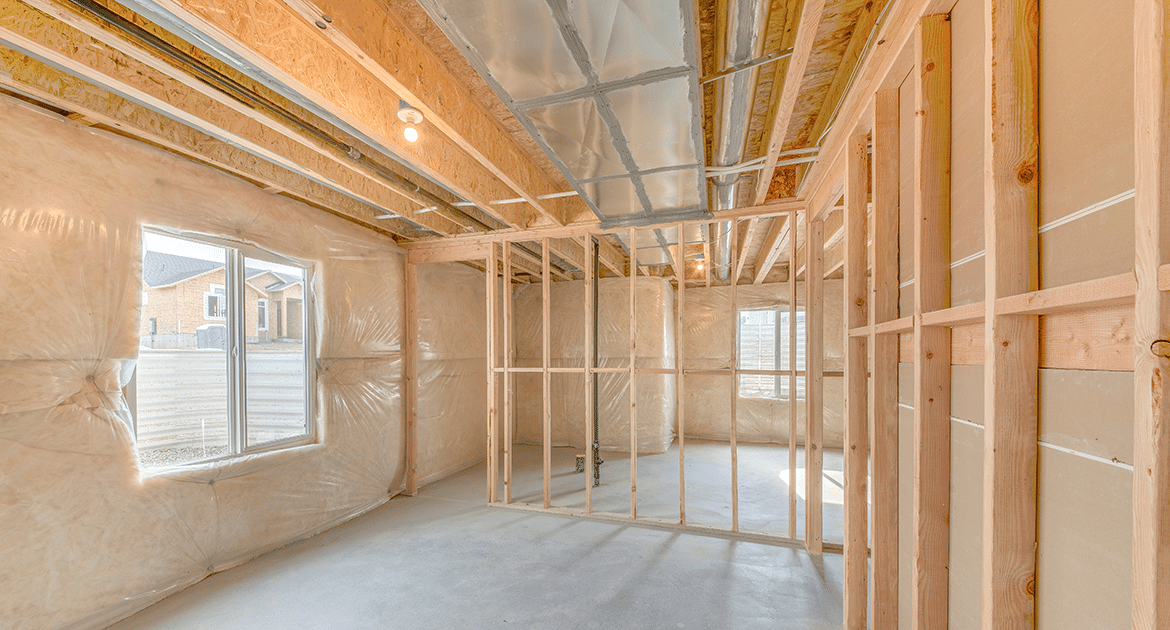
An unfinished basement framed with new wood studs and insulated walls, daylight coming through a window

The In-Law Suite Most People Price Wrong

The In-Law Suite Most People Price Wrong 1200 630 Creative Studio

Key takeaways

  • Converting space you already own is usually cheaper than building a separate unit in the backyard, and most homeowners price the backyard version first.
  • Atlanta currently allows only detached accessory units, which means basement apartments and garage conversions aren’t permitted in the city today.
  • The Atlanta Department of City Planning has proposed allowing attached conversions, but that change hasn’t been adopted and is still moving through review.
  • Accessory dwelling rules are written city by city and sometimes tightened further by an HOA, so the only answer that counts is the one from your own jurisdiction.
  • A cash-out refinance and a home equity line are the two routes I can help with directly, and which one fits depends on your situation and what you qualify for.

A client called me last month because her mother is moving down from Ohio. She’d been going back and forth about it for the better part of a year, and she’d landed where a lot of families land. She wanted her mom close by, but she didn’t want her mom living in the guest room off the hallway. Both of them wanted a door that closes and a kitchen that belongs to somebody. So, she’d gotten a quote on a small cottage for the backyard, and the number came back high enough that she called me half convinced the whole idea was finished.

I asked her one question before we talked about money at all, which was what she had above her garage. There was a full floor up there, unfinished, holding a Christmas tree and a treadmill nobody had touched in three years. She’d priced the most expensive version of what she wanted without ever looking at the cheaper one sitting over her own cars, and in my experience that’s how it usually goes.

The expensive version is the one people price first

The phrase the industry uses for a second living space on your property is accessory dwelling unit, which is a clumsy name for a simple thing: somewhere smaller to live, on the same lot as the main house. An in-law suite is one. So is a garage apartment, a finished basement with its own entrance, and the little cottage at the back of the lot that people’s grandparents called a granny flat.

When somebody pictures an accessory unit, they almost always picture the cottage. It’s the version that shows up in magazines and the version builders put on their websites, and it’s also the version that requires a foundation, a roof, new plumbing runs and a new electrical service. Every one of those is a line item that a conversion of existing space either skips entirely or handles far more cheaply.

Cities that have allowed accessory units for years show which version homeowners actually choose. The Atlanta Department of City Planning, comparing our rules to other cities, points out that in Los Angeles nearly four out of every five accessory units are conversions or expansions of space that already existed. Only one in five are detached buildings. Given a real choice between the two, most homeowners don’t build in the yard.

I’m not telling you the cottage is a bad idea. If your basement is four feet tall and your garage is falling down, the yard may be your only option. I’m telling you that most people never price the comparison, and the comparison is where the money is.

What people actually want the space for

People’s reasons for wanting an in-law suite are more mixed than the internet suggests. The pitch online is almost always rental income, and income is part of it for a lot of families. It’s rarely the whole story, and in my office it’s usually not the part that started the conversation. What starts it is a parent, or a kid who moved home, or a sister between houses.

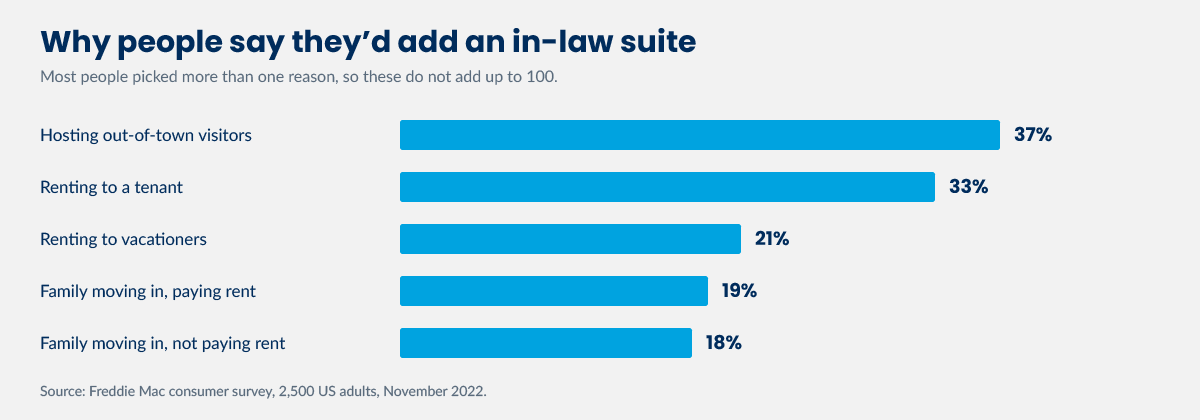
When Freddie Mac asked homeowners in 2022 why they’d want one, the most common answer wasn’t income at all. It was having somewhere to put out-of-town visitors. Renting came next, and moving family in came after that. People could pick more than one reason, so the shares add up to well past 100, and plenty of them had a family reason and an income reason at the same time.

Bar chart of the top reasons people would consider an accessory dwelling unit, from a Freddie Mac consumer survey: hosting out-of-town visitors 37 percent, renting to tenants 33 percent, renting to vacationers 21 percent, moving family in permanently with rent 19 percent, moving family in temporarily without rent 18 percent

Two other surveys point the same way. AARP’s 2024 survey of adults found that one in four older homeowners say they would consider building an accessory unit to provide space for a loved one who needs care or a place to live. The Census Bureau counted 6.0 million American households in 2020 with three or more generations under one roof, up from 5.1 million a decade earlier, and that was 7.2 percent of all family households. Families are spreading across fewer addresses than they used to, and the house is where that gets absorbed.

What Atlanta allows right now

Atlanta’s rules need spelling out precisely, because the answer changes at almost every city limit. What follows is true inside the Atlanta city limits and nowhere else. If you’re in Marietta or Decatur or unincorporated Gwinnett, read it as an illustration of how much these rules vary rather than as your answer.

In Atlanta today, you can build a detached accessory unit without asking the city for special permission, as long as your property sits in one of the residential zones the code lists (R4, R4A and R5) plus a handful of special districts. That’s the city’s own description of its current code. The unit has to be its own building, separate from the house, and it can’t be split off and sold as its own lot.

Notice what’s missing from Atlanta’s current rules. Atlanta doesn’t currently allow the accessory unit to be attached to the main house. A basement apartment with its own entrance and an apartment carved out of an attached garage, the two cheapest versions of this, aren’t on the table inside the city right now. The city’s planning department says so plainly, and names it as the thing that makes Atlanta an outlier: limiting homeowners to detached units limits them to the more expensive option. So, if you live in the city and somebody has told you to just finish the basement and put a door on it, that advice is out of date, or it came from somewhere else.

What the city has proposed, and what that means for timing

The Department of City Planning has put forward a set of changes, and they go directly at that gap. The proposal would allow accessory units attached to the main dwelling, specifically naming a basement apartment or a garage conversion, capped at half the size of the main house or 1,000 square feet. It would raise the size limit on detached units from 750 to 1,000 square feet, raise the height limit from 20 to 24 feet so a unit over a garage becomes possible, extend the allowance to the R4B district, and stop counting garage space against the unit’s square footage.

None of those proposed changes is law yet. The proposal sits inside the city’s larger zoning rewrite and is still working through the review process, which means neighborhood review, a zoning board hearing and a City Council vote before anything changes. I’m not going to guess at the timing, and you should be suspicious of anyone who does.

The practical consequence for an Atlanta homeowner is that the calendar matters. If the conversion you want is attached, the answer today is no, and it may not be no forever.

What actually stops these projects

Every one of these projects runs into the same wall, and the wall is permission rather than money. Permission is what people check last, and it’s what they should be checking first.

Accessory dwelling rules are written city by city and county by county. Two houses four miles apart can sit under completely different rules, and an HOA can tighten things further on top of whatever the city allows, including banning a separate kitchen or a separate entrance outright. I can’t tell you what your jurisdiction permits, and neither can a contractor who works across three counties, and neither can a website. You have to ask your own planning department and read your own covenants.

The other thing that stops these projects is whether the space can actually work. A separate entrance, ceiling height that meets code, a way to run water and waste to a new kitchen and bathroom, and enough of a footprint that somebody can live there without walking through your living room. Plenty of basements fail on ceiling height alone. Better to learn that in week one than in month four.

Paying for it

Paying for the work is the part clients ask me about, so let me be straight about what I can and can’t help with. I went through all five ways people pay for a project like this a couple of weeks back, and I won’t put you through it twice. That whole comparison is still up on the blog if you want the long version.

The two routes I work with are a cash-out refinance, where you replace your current mortgage with a larger one and take the difference in cash, and a home equity line of credit, which is a second loan against the house that you draw on as you need it rather than taking all at once. Which of those makes sense depends on your current mortgage, how much equity you have, and what the work is likely to cost. What you’d qualify for varies by program, by property and by borrower.

Rolling other debts into the mortgage is the one I want to warn you about. If you’re thinking about folding existing balances in while you borrow for the conversion, know that debts your house isn’t currently backing become debts it is backing, and stretching them over a mortgage’s length can mean paying more interest overall even when your monthly payment drops. That’s a real trade, and I’d want to walk through it with you before you decide.

Before you call anyone, work through this

Most of the wasted money on these projects gets spent in the first month, on plans for something that was never going to be allowed. Run this list first.

  • ☐  Find your zoning district on your city or county’s online zoning map
  • ☐  Call your local planning department and ask specifically whether an attached accessory unit is permitted in your district
  • ☐  If you’re in an HOA, read the covenants for language on separate kitchens, separate entrances and rental of any part of the property
  • ☐  Measure the finished ceiling height of the space you have in mind and check it against your local code minimum
  • ☐  Identify where water and waste would connect for a new kitchen and bathroom, and get a plumber’s opinion before an architect’s
  • ☐  Confirm whether the space would need its own entrance and whether you have somewhere to put one
  • ☐  Get two quotes on the conversion and one on the detached version, so you’re comparing rather than guessing
  • ☐  Work out how much equity you have before you decide how the work gets paid for

Take the list to your planning department before you take it to a builder. The answers are free, they take one phone call, and they determine everything that comes after.

If you want to talk through the financing side once you know what your city allows, give me a call. I’d rather help you work out what’s realistic now than fix a plan that was built on the wrong rules.

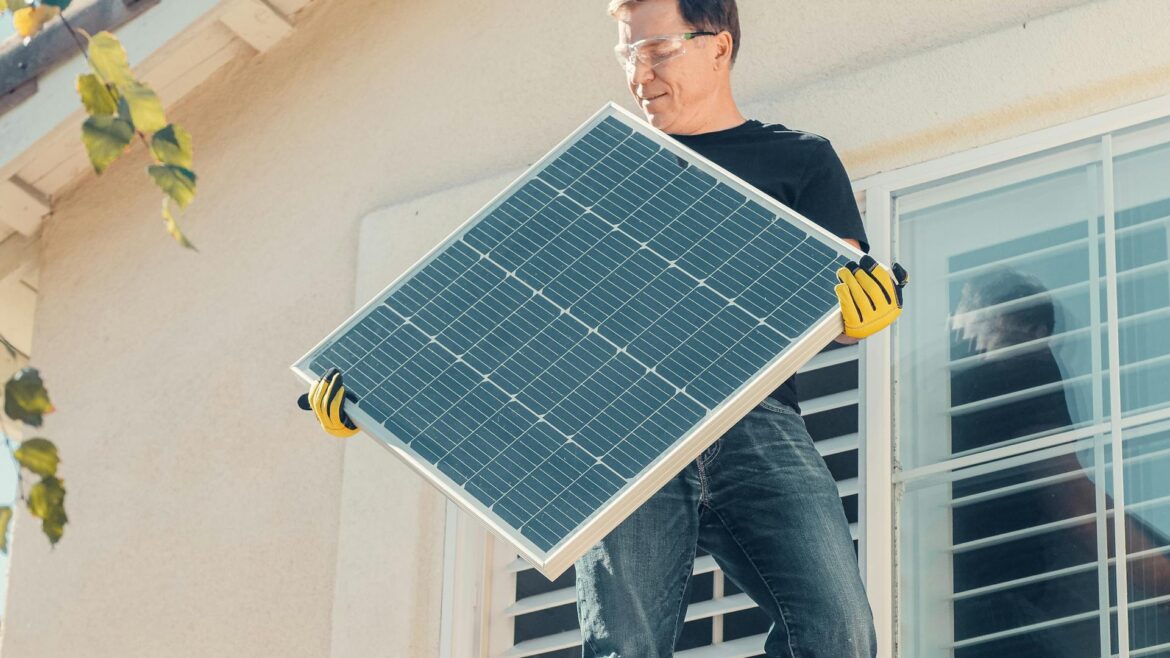
Photo of a man on a tile roof holding a solar panel to install solar energy on his home.

Eco-Friendly Homes: Healthier, Happier Home Finances

Eco-Friendly Homes: Healthier, Happier Home Finances 1920 1271 Your Loan Officer for Life

Key Takeaways

  • Significant Savings and Sustainability: Eco-friendly home upgrades like LED lighting, high-efficiency appliances, and solar panels not only reduce your carbon footprint but also offer substantial savings on utility bills. These green choices can lead to long-term financial benefits, including lower energy costs and potential tax incentives.
  • Improved Home Comfort and Health: Upgrading to energy-efficient windows, adding insulation, and using sustainable materials can significantly enhance your home’s comfort. These improvements lead to better temperature control, reduced noise levels, and improved air quality, creating a healthier living environment for you and your family.
  • Increased Property Value: Investing in eco-friendly home upgrades can raise your property’s value and appeal to future buyers. Features like solar panels and energy-efficient appliances make your home stand out in the market, potentially leading to a higher appraisal value and a quicker sale.

In today’s world, sustainability has infused every aspect of our lives, from recycling, to buying local, to eating farm-to-table. Our homes are no exception to the great push into going green, with many home buyers looking for eco-friendly homes that are cozy, comfortable havens with a smaller utilities footprint.

On top of adding appealing features to your home for potential buyers, you might want to look to eco-friendly upgrades for the tangible benefits of saving money, enhancing comfort, and increasing property value.

Why Eco-Friendly Homes Are a Big Deal

Your home is more than just a place to crash, it’s a reflection of your personality and values. Eco-friendly home upgrades are designed to reduce your household’s carbon footprint by utilizing less water, energy, and natural resources. These upgrades can significantly reduce your monthly utility bills, improve indoor air quality, and even raise your property value.

These upgrades not only cut down on your utility bills (though that’s a pretty sweet perk!); they also improve air quality, creating a healthier, more comfortable space for your loved ones. Energy-saving windows, for example, can raise your property value and give your home that special glow that says, “Hey, future buyers, I’m a gem!”

Since energy costs are continually rising, and homebuyers are increasingly environmentally conscious, the appeal of a sustainable home has never been higher.

Picture of a clear LED bulb against a blurred background.

The Best Spots to Go Green

Let There Be (LED) Light: Swapping out those old bulbs for LED ones? A total game-changer for saving energy. Upgrading to LED lighting, energy-efficient appliances, and smart thermostats can drastically save on energy consumption. High-efficiency heating and cooling systems also save energy while making your home more comfortable. One thing about LED bulbs I learned the hard way is that you’ll also want to change your wall switch if you want them to last for the maximum lifespan.

Water-Saving Wonders: Those low-flow faucets, showerheads and toilets? They reduce water usage without significantly compromising performance.

Cozy Up with Insulation: Upgrading your insulation and investing in energy efficient windows help keep your home comfy season after season. Look for products with high R-values and ENERGY STAR ratings to keep your home comfortable year-round, reduce energy consumption, and lower heating and cooling costs.

Solar Panels: Sunshine Superheroes: Imagine tapping into the Sun’s power to light up your home. Solar panels do just that AND seriously cut down your electricity bills. Solar panels are a big investment, but they can pay for themselves and then some over the long-term by reducing your electric bill. In some cases, you’ll even come across government incentives or tax breaks to make this an even sweeter deal. Keep in mind that solar panels have a drop-off in power production over time (often after 10 years). So, give this one plenty of thought and research before deciding if solar power is right for your home.

Stylish and Sustainable Materials: From bamboo floors to recycled glass countertops, choosing sustainable materials means your home is not just green—it’s stylish too. If you’re having a custom home built, or renovating an existing home, keep an open mind to sustainable materials like bamboo flooring, recycled glass countertops, recycled brick, reclaimed wood, and non-VOC paints. These materials are environmentally friendly, can make your home healthier, and add unique beauty and character by incorporating more natural materials. It can even be friendlier for your budget if you try sourcing recycled and reclaimed materials through Facebook Marketplace or Nextdoor.

Photo of a woman in a blue t-shirt taking cash out of a wallet.

The Wallet-Friendly Perks of Going Green

I know I talked about how each of these eco-friendly upgrades saves you money, but I want to talk about the big financial picture. Investing in green upgrades can be an investment up front, so the out of pocket can seem like a big hurdle to get to the benefit of long-term savings.

But think about the freedom of having fewer monthly bills and more going back into savings each month for years! Upgrades like these truly are the gift that keeps on giving – giving peace of mind, savings, and growing home equity. Lower utility bills, less maintenance, and even some sweet tax incentives make these upgrades a smart move for your budget and your financial wellbeing for years to come. Consider that energy and repair costs will keep rising in the future, so your monthly savings will get better with age too!

Photo of a bathtub with a white towel draped over the edge featuring a low flow faucet.

A Home That Hugs You Back

Beyond the savings, there’s something magical about living in an eco-friendly home. It’s like it breathes along with you, offering cleaner air, a quieter, more serene environment, and that just-right feeling all year round. And when the time comes to sell, these green upgrades can translate into a higher appraisal, more home equity, and make your home stand out to potential buyers.

Kickstarting Your Green Savings

Feeling inspired? Starting your eco-friendly journey doesn’t have to be an all-or-nothing leap. Begin with a few small changes and watch how they start to add up. Every step toward sustainability brings you closer to a home that is more comfortable, cost-effective, and appealing to future buyers.

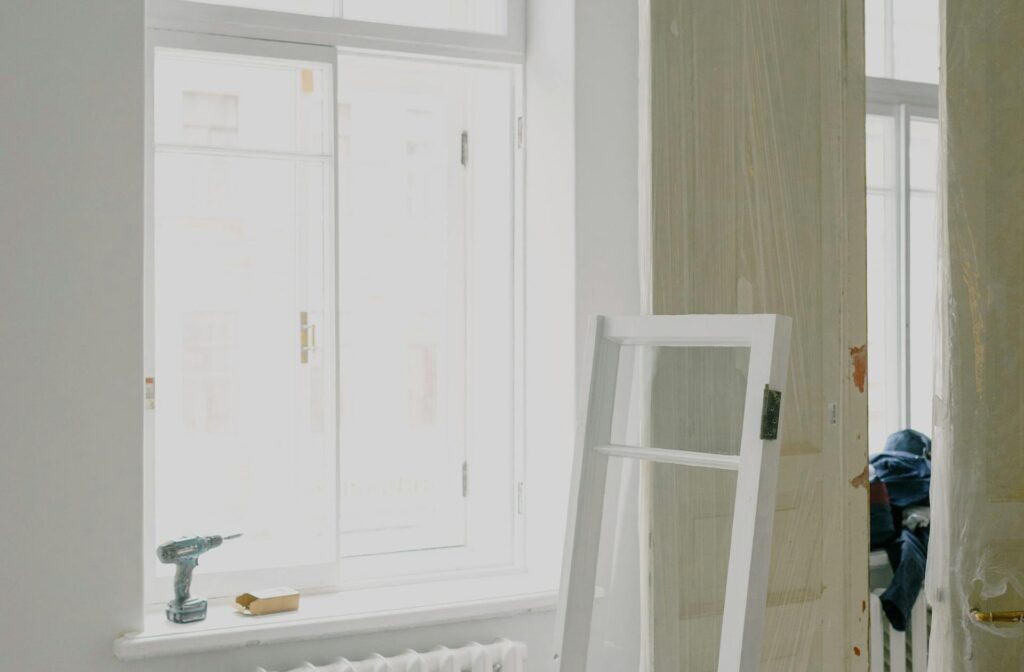
Photo of a home interior with energy efficient windows recently installed.

Real Stories, Real Impact

At Milend, we’ve seen the incredible difference eco-friendly upgrades can make. Take the Nguyens, whose new, efficient windows, caulk and insulation, and LED lighting made their home the coziest and brightest spot on the block. The Department of Energy says the average homeowner to make these two upgrades will save $690 in energy costs each year! Imagine what’s possible for your home and budget if you save 40% on your energy bills.

Let’s Do This, Together!

Sustainability is already a part of our daily lives. It’s about making thoughtful choices that benefit our wallets, our health, and our future.

If you’re inspired to make your home more sustainable and want to learn more about eco-friendly upgrades, sign up for our newsletter. You’ll receive the latest tips, success stories, and insights to help you navigate your eco-friendly and budget-friendly home improvement journey.

Together, we can make our homes work better for the way we live, our wallets, our health, and build a future of financial freedom for ourselves and our loved ones. Let us know in the comments or use the contact page to tell us how we can support your home financing journey.

Let’s Grow Together

As we navigate the spring market and beyond, let’s remember the values that bind us: trust, commitment, personal growth, and the importance of home. If you’re pondering your next move or seeking guidance in the ever-changing real estate landscape, reach out. Together, we can explore your options, prepare for the future, and turn the dream of homeownership into reality.

Stay tuned for more insights, and don’t hesitate to join our community for updates, tips, and stories that celebrate our journeys home, one step at a time.

Spring Market Preview: What to Expect in Real Estate
Read more...
Understanding Closing Costs: A Homebuyer’s Guide
Read more...